An Aluminum Entry Door is more than a polished entrance. It is the first barrier against wind, rain, heat, noise, and daily traffic. Its slim frame can create a wider glass opening, while aluminum resists rot, insects, and many forms of corrosion. That matters at a busy family entrance, where wet shoes and repeated use quickly test weaker materials.
Building-science expert Joseph Lstiburek has often emphasized, “A building enclosure is a system.” This principle applies directly to every Aluminum Entry Door. The frame, glass, threshold, seals, drainage, and surrounding wall must work together. A strong door cannot correct poor flashing or careless installation. Small gaps near the sill may invite cold air and water.
Choosing aluminum also requires honest comparison. Basic frames can conduct heat, especially without a thermal break. Dark finishes may become hot under direct afternoon sun. Hinges, locks, and weatherstripping need suitable quality, too. It is not perfect.
Still, a properly specified door can offer a clean appearance and dependable service for many years. Look for corrosion-resistant finishes, insulated cores, tested hardware, and clear warranty terms. Ask how the threshold drains water. Check whether the installer has experience with local weather conditions. The right choice is not simply the most attractive door. It is the door that fits the building, climate, budget, and way people actually live.
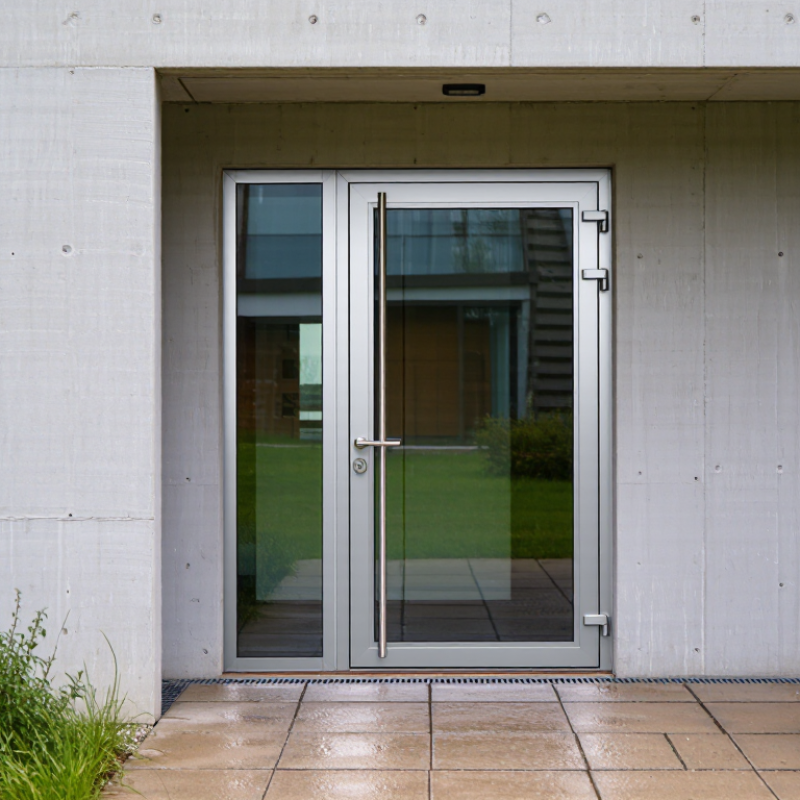
What Is an Aluminum Entry Door?
What Is an Aluminum Entry Door?
An aluminum entry door is an exterior door made with aluminum framing and one or more infill panels. It is designed for a building’s main entrance, where people, weather, and security demands meet. Unlike solid steel doors, aluminum doors usually have hollow profiles with internal chambers. These chambers reduce weight while supporting the frame and hardware.
The door may include glass, insulated panels, or decorative inserts. A thermal-break profile places a nonconductive material between the exterior and interior aluminum surfaces. This detail helps reduce heat transfer and interior condensation. It matters most in homes with strong temperature differences between indoors and outdoors. Weatherstripping around the edges limits drafts, rain, and dust. Proper alignment matters too.
Small errors become obvious.
During site inspections, I have seen a beautiful door perform poorly because the threshold was uneven. Aluminum resists rust better than many common metals, but it is not maintenance-free. Scratches, loose hardware, blocked drainage channels, and damaged seals still need attention. Its surface may be anodized or powder-coated, depending on the design and exposure conditions. The frame should match the wall opening, local climate, expected traffic, and door weight. A large glass panel can brighten an entryway, yet it may need suitable safety glazing and careful support. Aluminum is a practical material, but choosing a door requires more than judging its color or slim appearance.
How Aluminum Entry Doors Are Designed and Constructed
An aluminum entry door begins with a measured opening, not a decorative panel.
Designers study wall thickness, threshold height, weather exposure, and daily traffic. These details shape the frame depth, swing direction, hardware position, and glass size. Small errors here can create rubbing, air leaks, or difficult locking.
Manufacturers usually form the frame from extruded aluminum profiles. Internal chambers add stiffness while reducing unnecessary weight. Many doors include a thermal break, which separates interior and exterior aluminum surfaces. This design limits heat transfer and reduces condensation risks. Insulated glass may use two panes, sealed spacing, and low-emissivity coatings. The exact combination should match the local climate.
Construction quality depends on careful assembly. Corners may be mechanically joined, reinforced, or welded, depending on the profile system. Gaskets press against the glass and frame to block drafts and rain. Hinges must support the door without allowing gradual sagging. A sloped threshold and drainage paths help water escape. Finish matters too. Anodized or powder-coated surfaces can resist weather, but poor preparation still causes early failure.
I have found that beautiful doors can hide weak details. That deserves attention. Review the seals, fasteners, drainage holes, and frame alignment before installation. Aluminum is durable, but it is not maintenance-free. Seasonal cleaning and occasional hardware adjustment preserve smooth operation. The design may look simple. The engineering is not.
Key Features and Benefits of Aluminum Entry Doors
An aluminum entry door combines a lightweight frame with strong structural performance. Its slim profiles can create wider glass areas without making the door feel bulky. Aluminum also resists warping, cracking, and insect damage better than many traditional materials. That matters in humid entrances, where wood can swell around the lock and hinges.
Energy performance depends on construction, not metal alone. A thermal break separates the interior and exterior aluminum surfaces, reducing heat transfer through the frame. Low-emissivity glazing can improve comfort near the doorway. The U.S. Department of Energy reports that windows can cause 25–30% of residential heating and cooling energy use. A glazed entry door should therefore be evaluated as part of the building envelope. Look for independently tested U-values, air leakage ratings, and water resistance results.
Durability is another practical benefit. Powder-coated or anodized finishes can maintain appearance with limited maintenance, although scratches still need prompt attention. The International Aluminium Institute reports that recycled aluminum requires about 5% of the energy used for primary aluminum production. Recycled content can support lower-impact projects, but its percentage should be verified through product documentation. Aluminum is not automatically sustainable. Poor installation can create drafts, condensation, and premature hardware wear. Careful flashing, accurate alignment, and a continuous weather seal often matter as much as the door material.
Types, Styles, and Customization Options
An aluminum entry door uses lightweight metal panels, frames, or both to create a durable entrance. Its resistance to rust makes it practical for rainy coastlines and humid neighborhoods. Compared with steel, aluminum is easier to handle during installation. However, its performance depends on the frame design, seals, and thermal break.
Common types include single doors, paired double doors, and doors with narrow sidelights. Full-glass models bring daylight into a dark hallway. Solid panels provide more privacy and a stronger visual boundary. Sliding aluminum doors suit wide openings, although they need excellent track drainage. Traditional homes often use raised panels and warm finishes. Contemporary properties favor flat surfaces, long vertical handles, and dark powder coatings. Industrial designs may combine aluminum frames with clear or textured glass.
Customization can cover nearly every visible detail. Homeowners can select bronze, white, charcoal, or wood-look finishes. Glass choices include frosted, tinted, laminated, and decorative patterns. Hardware should match the door’s weight and daily use. A wide threshold can improve weather protection, but it may affect accessibility. Accurate measurements matter; even a small error can create drafts or difficult locking. Ask for tested air, water, and wind performance, plus insulation values suited to the local climate. I would not choose a dramatic finish without checking real samples in daylight. Screens can mislead. Door design is personal, but maintenance requirements should remain practical.
How to Choose and Maintain an Aluminum Entry Door
Choosing an aluminum entry door starts with your doorway, not a showroom finish. Measure the opening width, height, depth, and sill condition before comparing designs. Aluminum resists rust, insects, and moisture, making it useful for exposed entrances. Still, the frame can conduct heat quickly. Look for a thermal break, insulated core, and weather seals that fit tightly. Check the door’s air, water, and wind ratings when available. These details matter more than a fashionable surface.
In practice, I prefer a door that feels stable without dragging across the threshold. Ask an experienced installer to inspect wall alignment, drainage, hinges, and lock placement. Poor installation can cause drafts, even with a high-quality door. Confirm the glass specification if the door includes glazing, especially for security and energy performance. Local building requirements may also affect size, glazing, and emergency access. Do not rely on appearance alone. It can mislead.
Maintenance is simple but should be regular. Wipe the frame with mild soap, clean water, and a soft cloth every few months. Remove grit from the sill before it scratches the finish or blocks drainage holes. Inspect seals for flattening, tears, or gaps, then replace damaged sections promptly. Lubricate hinges and moving hardware only with products approved for those components. Avoid abrasive pads and harsh solvents; they may dull the coating. I once ignored a small seal gap, expecting it to remain harmless. It later admitted cold air during storms.
What Is an Aluminum Entry Door and Why Choose One?
An aluminum entry door uses lightweight, corrosion-resistant aluminum frames and panels. It is commonly selected for its low maintenance needs, dimensional stability, and resistance to moisture and rust. The chart shows practical inspection and maintenance intervals for a typical residential aluminum entry door.
Recommended intervals are general residential guidelines. Doors exposed to coastal air, heavy rain, dust, or frequent use may require more frequent cleaning and inspection. Regular cleaning helps protect the finish, while annual checks can identify worn seals, loose hardware, blocked drainage paths, or early coating damage.
Conclusion
An Aluminum Entry Door is a strong, lightweight entrance solution made from aluminum components designed to provide security, durability, and visual appeal. Its construction typically combines a precisely engineered frame with insulated panels, durable hardware, weather-resistant finishes, and carefully sealed joints. This design helps the door resist rust, moisture, warping, and everyday wear while supporting improved energy efficiency and smooth operation.
Available in modern, traditional, minimalist, and custom styles, aluminum entry doors can be tailored through different colors, surface textures, glass panels, sizes, opening methods, and decorative details. When choosing one, homeowners should consider the door’s insulation performance, frame quality, security features, climate resistance, maintenance requirements, and compatibility with the building’s architecture. Routine care is simple: clean the surfaces with mild soap and water, inspect seals and hardware periodically, and address minor damage or alignment issues early. With proper selection and maintenance, an aluminum entrance can provide reliable performance and lasting curb appeal.

 Grandex Door