Choosing a Modern Aluminum Entry Door is not merely a matter of selecting a striking front elevation. It involves climate, security, thermal performance, maintenance, and daily use. Global buyers face different conditions, from humid coastal air to freezing winters and intense desert sunlight. A door that performs beautifully in one region may disappoint in another.
Architect Ludwig Mies van der Rohe offered a useful design principle: “Less is more.” His words suit contemporary aluminum doors, where slim sightlines, clean surfaces, and carefully controlled details create visual strength. Yet simplicity can hide complicated engineering. Thermal breaks, insulated cores, multi-point locks, weather seals, drainage channels, and durable powder coatings deserve close inspection. The frame may look minimal. Its performance is not.
This guide reviews ten leading Modern Aluminum Entry Door options for international buyers. Each selection is considered through practical details, including panel construction, glass configuration, hinge quality, threshold design, finish durability, and installation requirements. A matte black door can look elegant beside warm concrete, while a bronze finish may better complement stone or timber. Small choices matter.
There is no perfect door.
Buyers should verify regional certifications, warranty terms, replacement-part access, and installer experience before ordering. Product descriptions can sound persuasive, but real performance depends on manufacturing accuracy and fitting conditions. Some doors may also require more maintenance than expected in salty or polluted environments. This guide aims to support careful comparison, not blind purchasing, so readers can identify a door that balances appearance, resilience, comfort, and long-term value.
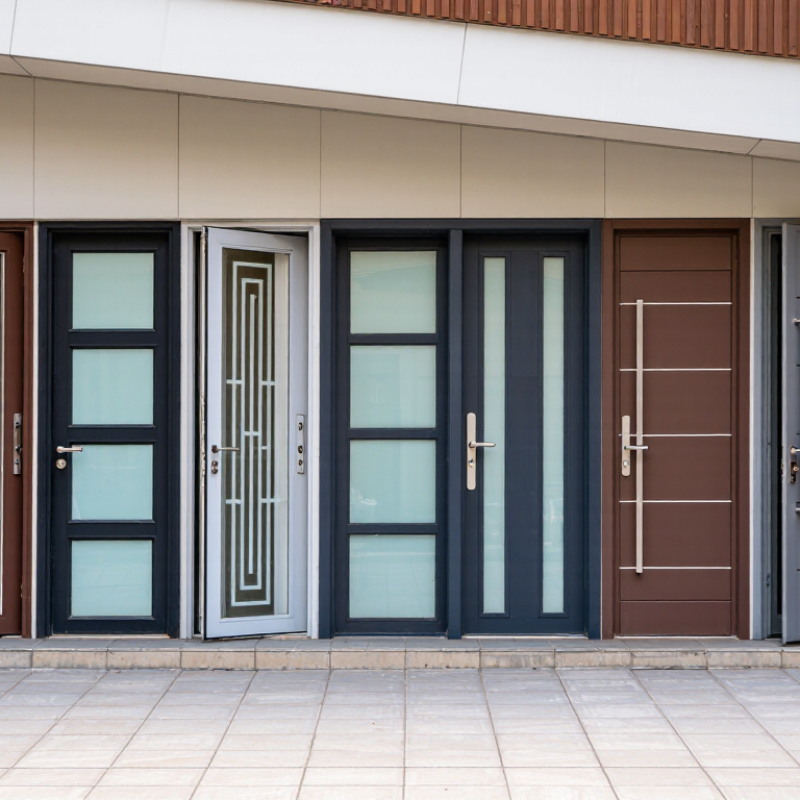
10 Best Modern Aluminum Entry Doors for Global Buyers
Define Global Performance Criteria: ENERGY STAR U-Factors of 0.27–0.40
For global buyers, U-factor should be a measurable starting point, not a decorative specification. It shows how quickly heat moves through the complete door assembly. Lower is better. A U-factor between 0.27 and 0.40 indicates strong thermal performance for many residential applications. However, ENERGY STAR requirements can vary by product type, climate zone, and certification market. Buyers should verify the applicable regional criteria before comparing models.
Aluminum doors need careful thermal engineering. Look for insulated cores, continuous thermal breaks, low-conductivity spacers, and well-sealed glass units. The frame matters as much as the panel. A triple-glazed insert may improve the rating, but poor weatherstripping can still create drafts around the edges. Installation still matters. Ask for independently verified test data, including the complete assembly rather than glass-only results. Documents should identify the testing method, certified size, and climate assumptions.
A lower number is not everything. Very low U-factors may increase cost, weight, or hardware demands. I have seen specifications look excellent on paper while installation details remained vague. That deserves scrutiny. Compare U-factor with air leakage, solar heat gain, condensation resistance, and local energy requirements. In cold regions, prioritize heat retention and warm interior surfaces. In hot climates, consider solar exposure and cooling loads. A reliable supplier should explain these trade-offs clearly, without promising identical performance in every building.
Modern aluminum entry doors deserve comparison beyond appearance. The strongest ten designs combine thermal-break frames with carefully matched glazing systems. Options include pivot, single-leaf, double-leaf, sidelighted, transomed, flush, narrow-stile, concealed-hinge, ventilated, and oversized formats. Each design changes heat flow, daylight, weight, and installation risk.
A thermal break separates interior and exterior aluminum with a low-conductivity barrier. It reduces conductive heat transfer through the frame. Low-e double glazing usually offers a practical balance between insulation, price, and weight. The U.S. Department of Energy reports that low-emissivity windows can reduce window energy loss by 30–50%. That figure depends on climate, spacer quality, orientation, and installation. Glazing is not decoration.
For global buyers, compare tested U-factor, solar heat gain coefficient, visible transmittance, air leakage, and water resistance. The National Fenestration Rating Council uses these performance indicators for transparent product comparisons. In cold regions, lower U-factor matters most. In hot climates, controlled solar gain can prevent a bright entry hall from becoming an oven. The 2024 Global Status Report for Buildings and Construction states that buildings consume about 32% of global energy and produce approximately 34% of global carbon emissions. Small entrance areas still matter.
My practical ranking would favor a thermally broken frame, insulated threshold, warm-edge spacer, and laminated low-e glass. However, “best” is conditional. A spectacular oversized door may sag without stronger hardware and precise anchoring. A quieter design may lose daylight. Check certified testing, not showroom confidence. Local wind, humidity, and installer skill can overturn an otherwise excellent specification.
For global buyers comparing ten modern aluminum entry doors, EN 1627 offers a practical security framework. It evaluates the complete door set, including the frame, lock, hinges, glazing, and installation. RC2 ranks as a strong baseline for many homes. It addresses an opportunistic intruder using basic hand tools. RC3 requires a higher resistance level and considers a more experienced attacker using heavier tools. Details matter. An aluminum panel alone proves little.
My security ranking places a certified RC3 door set first, followed by a certified RC2 system. A tested multi-point lock comes next, especially when paired with a protected cylinder. Laminated security glazing deserves equal attention. Weak glass can undermine a strong frame.
Reinforced hinge sides, anti-lift pins, concealed fixings, and a rigid threshold follow closely. The tenth feature is professional anchoring into the surrounding wall. Installation is not decoration.
A buyer should request the full EN 1627 classification, not a vague “high security” claim. Certification should identify the tested configuration, because changing the lock or glass may change performance. I have seen attractive doors lose practical value through poor fitting and exposed cylinders. That is an uncomfortable detail. RC2 is not automatically inadequate, and RC3 is not automatically perfect. Climate, building design, maintenance, and daily use still affect real-world protection. Check seals, locking alignment, and hinge movement several times each year. A beautiful entrance must remain a complete security system.
10 Best Modern Aluminum Entry Doors for Global Buyers
Modern aluminum entry doors often look similar in photographs, but their tested performance can differ sharply. Global buyers should verify air, water, and wind ratings before comparing finishes or hardware. ASTM E283 measures air leakage through the complete door assembly under controlled pressure. Lower leakage usually indicates tighter weather seals and better fabrication. Ask for the tested size, pressure level, and reported leakage value. Numbers matter.
ASTM E331 evaluates water penetration during sustained static pressure. The test sprays water across the exterior while pressure challenges the seals, corners, joints, and threshold. A successful result does not guarantee performance in every climate. Installation quality remains critical. Small gaps around the frame can defeat a well-tested door. Check whether the report covers the exact configuration, including sidelites, glazing, and sill design.
ASTM E330 examines structural performance under uniform static air pressure. It helps show how the assembly responds to wind loads without permanent damage or unacceptable movement. Buyers should request pressure values, deflection data, and any permanent deformation results. Do not accept a general “wind rated” statement without test evidence. A beautiful door can still underperform. That is the uncomfortable part. Standards also do not replace local engineering requirements, exposure calculations, or careful site installation. A reliable selection process compares complete test reports, not isolated marketing claims.
| Ref. | Modern Aluminum Door Configuration | Typical Clear Opening | Frame & Thermal Design | Glazing / Panel Build-Up | ASTM E283 Air Leakage |
ASTM E331 Water Test |
ASTM E330 Structural Test |
Recommended Use | Verification Requirement |
|---|---|---|---|---|---|---|---|---|---|
| 01 | Single Inswing Entry Door | 900 × 2,100 mm (35.4 × 82.7 in) |
Thermally broken aluminum frame; 70 mm frame depth; continuous perimeter weather seals | 44 mm insulated low-e safety glass; argon-filled sealed unit | ≤ 0.10 cfm/ft² at 1.57 psf |
15 psf No uncontrolled leakage |
+/- 45 psf No permanent deformation |
Residential entrances in temperate and coastal climates | Request a project-specific test report covering the complete door assembly, frame, hardware, and threshold. |
| 02 | Single Outswing Entry Door | 1,000 × 2,200 mm (39.4 × 86.6 in) |
Thermally broken aluminum frame; reinforced lock stile; raised sill with drainage path | 48 mm insulated low-e laminated glass; warm-edge spacer | ≤ 0.10 cfm/ft² at 1.57 psf |
20 psf No uncontrolled leakage |
+/- 60 psf No failure of components |
Wind-exposed homes and apartment entrances | Confirm outswing threshold drainage and local egress, accessibility, and safety-glazing requirements. |
| 03 | Double French Entry Door | 1,800 × 2,200 mm (70.9 × 86.6 in) |
Thermally broken aluminum frame; multi-point locking; meeting-stile compression seals | 44 mm double insulating glass; laminated inner pane | ≤ 0.15 cfm/ft² at 1.57 psf |
15 psf No uncontrolled leakage |
+/- 45 psf No permanent deformation |
Large residential foyers and hospitality entries | Verify meeting-stile alignment, lock engagement, and the tested maximum door width. |
| 04 | Minimal-Frame Pivot Door | 1,200 × 2,400 mm (47.2 × 94.5 in) |
Deep thermally broken frame; concealed floor closer; reinforced pivot hardware | 60 mm insulated low-e laminated glass or insulated aluminum panel | ≤ 0.20 cfm/ft² at 1.57 psf |
10 psf No uncontrolled leakage |
+/- 35 psf No unsafe failure |
Contemporary residences with oversized feature doors | Verify the tested pivot size, hardware load, threshold design, and closing-force requirements. |
| 05 | Thermally Broken Flush Panel Door | 900 × 2,100 mm (35.4 × 82.7 in) |
Thermally broken aluminum frame; insulated panel core; three-point or multi-point lock | 60 mm insulated aluminum panel with low-conductivity core | ≤ 0.10 cfm/ft² at 1.57 psf |
20 psf No uncontrolled leakage |
+/- 60 psf No permanent deformation |
Cold climates, utility entrances, and high-privacy applications | Check panel U-factor, condensation resistance, lock-side reinforcement, and threshold continuity. |
| 06 | Aluminum Entry Door with Sidelight | 1,500 × 2,200 mm overall (59.1 × 86.6 in) |
Thermally broken frame; integrated mullion; continuous perimeter gaskets | 44 mm low-e insulating glass in door and sidelight; laminated safety glass where required | ≤ 0.15 cfm/ft² at 1.57 psf |
15 psf No uncontrolled leakage |
+/- 45 psf No unsafe failure |
Daylit residential and low-rise commercial entrances | Ensure the test specimen included the same sidelight width, mullion, sill, and glass specification. |
| 07 | High-Wind Coastal Entry Door | 900 × 2,100 mm (35.4 × 82.7 in) |
Reinforced thermally broken aluminum frame; stainless steel hardware; impact-resistant glazing option | Impact-rated laminated insulating glass; heavy-duty interlayer | ≤ 0.10 cfm/ft² at 1.57 psf |
30 psf No uncontrolled leakage |
+/- 90 psf No structural failure |
Hurricane-prone, typhoon-prone, and exposed coastal regions | Match the tested design pressure to the project pressure calculation; impact certification may be separately required. |
| 08 | Commercial-Grade Aluminum Glass Door | 1,000 × 2,400 mm (39.4 × 94.5 in) |
Heavy-duty thermally broken framing; adjustable compression hardware; reinforced corners | 32 mm laminated insulating glass; low-e coating | ≤ 0.15 cfm/ft² at 1.57 psf |
20 psf No uncontrolled leakage |
+/- 60 psf No unsafe failure |
Hotels, offices, retail, and mixed-use developments | Verify cycle testing, panic-hardware compatibility, accessibility clearance, and commercial threshold details. |
| 09 | Accessible Low-Threshold Entry Door | 950 × 2,100 mm (37.4 × 82.7 in) |
Thermally broken aluminum frame; low-profile drained threshold; lever hardware | 44 mm low-e insulating glass or insulated panel | ≤ 0.15 cfm/ft² at 1.57 psf |
10 psf No uncontrolled leakage |
+/- 35 psf No permanent deformation |
Accessible housing, healthcare, and public-facing buildings | Confirm threshold height, clear opening, opening force, drainage, and local accessibility regulations. |
| 10 | Oversized Double Pivot Entry Door | 2,400 × 2,600 mm (94.5 × 102.4 in) |
Structural thermally broken frame; engineered pivot system; concealed multi-point locking | 60 mm insulated laminated glass or composite aluminum panel | ≤ 0.20 cfm/ft² at 1.57 psf |
10 psf No uncontrolled leakage |
+/- 35 psf No unsafe failure |
Luxury residences, galleries, and landmark entrances | Require engineering review for maximum sash weight, pivot loads, deflection limits, and installation anchorage. |
| Performance values above are practical specification targets for comparing modern aluminum entry-door configurations, not certification claims for a particular manufacturer or product. ASTM E283 evaluates air leakage, ASTM E331 evaluates water penetration under static pressure, and ASTM E330 evaluates structural performance under uniform static air pressure. Before purchase, request an accredited laboratory report for the complete tested assembly and confirm the required design pressure for the project location. | |||||||||
Rating units: cfm/ft² = cubic feet per minute per square foot of door area; psf = pounds per square foot. Test pressure, specimen size, threshold design, hardware, glazing, installation method, and local building-code requirements can materially affect final performance.
For global buyers, the ten best modern aluminum entry doors should be judged beyond appearance. AAMA 2605 evaluates high-performance organic coatings through accelerated testing and South Florida exposure. Its requirements include ten-year weathering, limited color change, strong chalk resistance, and retained gloss. These details matter when a dark door faces intense sun, salt air, or seasonal rain. A door can look impressive on a showroom wall and age poorly outside.
Lifecycle value begins with the coating, but it does not end there. The International Energy Agency’s 2024 Global Status Report identifies buildings as using about 30% of global energy. Entry doors represent only a small part of that demand, yet poor seals can create noticeable drafts near occupied rooms. Specify insulated panels, continuous weatherstripping, thermally improved frames, and verified air-leakage data. AAMA 2605 does not certify thermal efficiency. That distinction is often missed.
Maintenance records also deserve attention. Ask for coating test evidence, repair procedures, hardware replacement access, and realistic service-life assumptions. In coastal projects, rinse schedules may matter more than premium color selection. In dry climates, dust can expose weak seals and abrasive finishes. Real buildings are messier. A lifecycle spreadsheet should include purchase, installation, cleaning, recoating risk, energy impact, and eventual recycling. Aluminum’s recyclability supports long-term value, but recycled content and local recovery systems vary widely. The honest choice may not be the cheapest door or the darkest finish; it is the specification that survives the actual climate.
It separates indoor and outdoor aluminum with a low-conductivity barrier. This reduces heat transfer through the frame. Performance still depends on installation and seals.
Low-e double glazing usually balances insulation, cost, and weight. Laminated glass can also improve safety and sound control. Glass is not decoration.
Compare U-factor, solar heat gain, visible transmittance, air leakage, and water resistance. Lower U-factor usually helps in cold regions. Controlled solar gain matters in hot climates.
Sidelighted and transomed designs add glass beside or above the door. They can brighten a dark entry hall. More glass may increase heat and privacy concerns.
No. Large doors can sag without stronger hardware and accurate anchoring. Their weight also increases installation risk. Big doors need careful planning.
A certified RC2 door set is a strong baseline for many homes. RC3 provides a higher tested resistance level. The complete set matters.
Check laminated glazing, reinforced hinges, anti-lift pins, concealed fixings, and a rigid threshold. Professional anchoring into the wall is essential. A strong panel alone proves little.
Request high-performance coating test evidence, including weathering, color change, chalk resistance, and gloss retention. Dark finishes may suffer under intense sunlight. Coastal air is harsher.
Include purchase cost, installation, cleaning, hardware access, energy impact, repair risk, and eventual recycling. Rinse schedules may matter near the sea. The cheapest door may disappoint.
This guide evaluates the 10 best Modern Aluminum Entry Door designs for global buyers by focusing on measurable performance rather than appearance alone. It explains how ENERGY STAR U-Factors between 0.27 and 0.40 can support energy efficiency, while thermal-break frames and advanced glazing systems help reduce heat transfer and improve indoor comfort. Each design is also compared for practical security, with EN 1627 resistance classes RC2 and RC3 providing a clear framework for assessing protection against forced entry.
The review further examines air, water, and wind performance through ASTM E283, E331, and E330 testing criteria. Finishes are assessed under AAMA 2605 standards for color retention, weather resistance, and long-term durability. By combining thermal efficiency, security, weather performance, finish quality, and lifecycle value, this comparison helps buyers select an aluminum entry door that balances modern design with dependable performance across different climates and building requirements.
Grandex Door