Choosing a Luxury Aluminum Entry Door in 2026 means balancing strong design with the way a door performs every day. A broad pivot door can create a striking entrance. But its weight, hardware, and installation need careful attention. A slim frame may look elegant in a showroom, yet feel less impressive if the finish shows scratches or the door does not close smoothly.
“ The details are not the details. They make the design.” Designer Charles Eames’s well-known observation applies here: the handle, frame joints, threshold, and finish shape the whole entrance. Look closely at thermal performance, weather seals, security hardware, and the manufacturer’s warranty. Ask for finish samples in natural light. Check how the door feels when opening, not only how it looks in a photograph. Small details matter.
This guide outlines what to compare before you buy, from aluminum quality and glazing options to customization and installation support. It also considers the quieter trade-offs: a dramatic design may need more maintenance, and a premium price does not guarantee a perfect fit. That part is easy to miss. Choose a door that suits your home, local climate, and daily use—not just a trend.
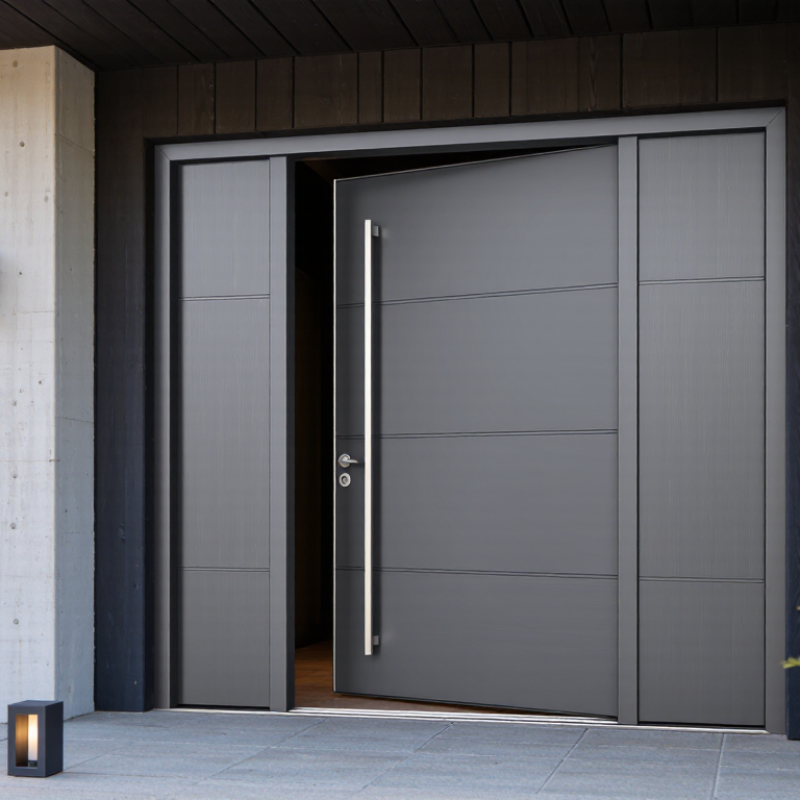
A luxury aluminum entry door in 2026 is defined by more than a polished surface. It should feel solid when opened, close evenly, and resist sticking as temperatures change. Look for a thermally broken frame, durable weather seals, and clear performance specifications for air and water resistance. Quality fabrication shows in tight corners, smooth edges, and hardware that moves without rattling. Details matter.
Design is part of the experience, but it should serve the home. Slim sightlines can bring in daylight, while insulated glass helps reduce heat transfer. A durable coating should suit the local climate and the amount of direct sun. Check the threshold, too; a beautiful door can still disappoint if water gathers near the sill. Installation matters just as much as the product. Even a well-made frame may underperform if the opening is out of square. That part is easy to overlook.
Tips: Ask for written thermal and weather-performance data, not just descriptive claims. Compare finish samples in morning and afternoon light. Confirm who measures the opening and how the installer handles sealing. And test the latch in person, if possible. A little hesitation in the showroom may become annoying every day.
Start with the opening, not the style. Measure twice. Record the rough width and height, then note wall depth, floor level, and nearby trim. A single hinged door often suits a compact entry and leaves more wall space for hooks or a console. A pair of doors can balance a broad façade, but both leaves need clear swing space. If the porch is tight, an outswing may help indoors; confirm landing clearance and site requirements with a qualified installer. Narrow sidelights bring daylight into dim halls, while a transom can add light without widening the frame. Glass placement matters.
For a large, open foyer, a pivot configuration may create a generous entrance. It needs suitable framing and room to move, so verify both before ordering. For busy households, a conventional hinged door may be easier to manage. Choose glazing by sightline: clear panes brighten the hall, while textured glass offers more privacy. Check handle reach, threshold height, and floor transitions against measured drawings. A common miss is planning around an empty entry. A mat, stroller, or wet boots can change the usable swing area. Real life intrudes. Even a careful plan may need adjustment once the doorway is in use.
How to Choose a Luxury Aluminum Entry Door in 2026? — How to Match Door Types and Configurations to Your Entryway
Compare common aluminum entry-door configurations by entryway shape, circulation needs, and design goals. Dimensions and hardware options vary by project; confirm the rough opening, finished clearances, and local requirements before ordering.
| Door type or configuration | Best suited entryway | Space and layout considerations | Design and daylight effect | Key checks before selection |
|---|---|---|---|---|
| Single hinged door | A compact or conventional entry with one clear opening and a defined exterior landing. | Plan for the leaf’s full swing arc. Choose inward or outward operation only after checking circulation, weather exposure, and local egress rules. | A simple, balanced focal point; can be paired with glazed panels or decorative detailing. | Confirm handing, hinge side, swing clearance, threshold height, and the finished clear opening—not just the nominal door size. |
| Single door with one sidelight | A narrow-to-medium façade where extra daylight is wanted on one side of the entrance. | Needs additional width beside the door. Check that the sidelight does not conflict with a nearby wall, return, or interior furnishing. | Brings light into the entry and can visually connect the door to adjacent glazing. | Review glass privacy, safety-glazing requirements, and how the sidelight frame aligns with the door and surrounding façade. |
| Single door with sidelights on both sides | A broad, symmetrical entryway where a strong central entrance is desired. | Requires more total rough-opening width than a single door. Allow for wall structure, trim, and installation tolerances on both sides. | Creates a formal, light-filled composition while keeping one active door leaf. | Check structural support above the combined assembly and consider privacy, glare, and nighttime visibility through the glazing. |
| Double hinged doors | A wide entrance where a generous opening or a paired-door appearance is important. | Both leaves need suitable swing space. One leaf may be used for everyday access while the second is secured, depending on the hardware system. | Provides a grand, symmetrical look and can create a wider passage when both leaves are open. | Confirm active and inactive leaf operation, meeting-stile seals, flush bolts or equivalent hardware, and the required clear passage width. |
| Pivot door | A spacious, design-led entry where a large leaf and distinctive movement suit the architecture. | Pivot rotation can project into both sides of the opening; verify the complete swing envelope and floor conditions. Large leaves may need specialist structural and hardware planning. | Offers a minimal, sculptural appearance and can make a tall entrance feel especially prominent. | Check pivot location, floor and head support, operating force, weather sealing, and whether the resulting clear opening meets project requirements. |
| Door with transom | An entry with ample height or a façade that benefits from borrowed light above the door. | Adds height to the overall assembly. Confirm available headroom and coordinate the transom with the lintel and surrounding wall construction. | Emphasizes vertical proportions and admits daylight without adding glazing at eye level beside the door. | Specify fixed or operable glazing, glass safety requirements, drainage details, and alignment with nearby windows or façade elements. |
| Door with sidelight and transom | A tall, wide entryway where a complete glazed surround is appropriate. | Requires careful coordination of the full frame assembly, structural opening, installation tolerances, and interior trim. | Creates a bright, unified entrance composition and can make a modest entry feel more open. | Review privacy and solar exposure, safety glazing, structural support, frame sightlines, and the performance of all assembly joints. |
| Accessible low-threshold configuration | An entry designed for easier passage, mobility devices, or reduced trip hazards. | Thresholds, floor transitions, door swing, and landing geometry must work together; a low threshold alone does not guarantee an accessible route. | Can provide a cleaner transition between interior and exterior while preserving a contemporary appearance. | Check applicable accessibility and building codes. In the U.S., accessible-route provisions commonly address clear width and threshold height; requirements depend on the project and jurisdiction. |
Planning note: Measure the rough opening at multiple points and distinguish it from the finished frame size and clear passage width. Confirm wind-load, water-management, thermal-performance, safety-glazing, egress, and accessibility requirements with the project professional and local authority having jurisdiction.
How to Choose a Luxury Aluminum Entry Door in 2026?
A luxury aluminum entry door should feel solid, operate smoothly, and suit the home’s exposure. Compare thermally broken frames with standard frames; the insulating barrier helps limit heat transfer. For finishes, weigh powder coating against anodizing, then check the stated coating specification. AAMA 2604 and 2605 are useful benchmarks for comparing exterior coating performance. Salt air and strong sun can change what makes sense. Small details matter.
Glass deserves equal attention. Compare double- or triple-pane units, low-emissivity coatings, and laminated glass based on climate, privacy, and sound. The U.S. Department of Energy’s Energy Saver guidance estimates that windows account for 25–30% of household heating and cooling energy use. A glazed entry door has different dimensions, but its glass and frame still affect heat transfer. Check the National Fenestration Rating Council label for U-factor and solar heat gain coefficient, rather than relying on “energy-efficient” claims alone.
Tips: Ask for the exact frame, glass, and finish specifications on one quote. Check the door in morning and afternoon light; a sample can look different at home. It’s easy to overfocus on glass style and overlook installation details. I’d compare those carefully, even if the choice feels less exciting.
Typical center-of-glass U-factor estimates (W/m²·K); lower values indicate less heat transfer.
These are representative values, not ratings for a specific product. Actual performance varies with coating, gas fill, spacer, and construction. Compare certified whole-door ratings too: the aluminum frame’s thermal break, weather seals, and installation also affect energy performance.
A luxury aluminum entry door should look refined, but its performance depends on the whole assembly. Ask for a tested whole-door U-factor, not a glass-only figure; lower values mean less heat transfer. Check air-leakage data and confirm the rating applies to your chosen door size and glazing. A thermal break separates the interior and exterior aluminum, limiting heat flow and reducing cold interior surfaces. In sunny climates, compare solar heat-gain performance too. Small details matter. Inspect the weather seals in person: they should meet evenly at the corners, without visible gaps.
For security, look beyond a heavy door panel. A multipoint lock, reinforced strike area, and secure hinge attachments can make forced entry harder, though no door is invulnerable. If the design includes glass, ask whether it is laminated and how it is retained in the frame. Verify that the lock, frame, and door have been tested as a system. Installation matters just as much. An excellent door fitted out of square may bind, leak air, or leave the latch poorly engaged.
Durability depends on finish quality, drainage, hardware, and exposure. Ask about finish testing and maintenance guidance, especially near salt air or strong sun. Check that the sill sheds water outward and that replacement seals and parts will remain available. Real life is messier. A showroom sample cannot prove years of weather performance. Compare written test results with the installer’s plan for flashing, anchoring, and adjustment.
Before ordering a luxury aluminum entry door, confirm the actual opening size, wall depth, and finished floor height.
Measure width and height at several points; older openings are rarely perfectly square. Specify the swing direction, hinge side, handle position, and threshold clearance in writing. A polished sample can hide practical details. Measure twice.
Check performance documents, not just glass appearance.
The U.S. Department of Energy’s Energy Saver guidance estimates that air leaks can account for 25–40% of heating and cooling energy use in a typical home. Ask for the door’s tested air-leakage information and an NFRC label, where available, showing U-factor and solar heat gain coefficient. Lower U-factor generally means less heat transfer. Confirm the aluminum frame includes a thermal break, especially in climates with cold winters or hot summers.
Before installation, agree on who supplies flashing, sill-pan drainage, and the air and water seals. Ask how the installer will connect these layers to the existing wall; a premium door can still leak when that junction is poorly handled. Review finish options against direct sun, rain, and coastal exposure, and request written care instructions. Check delivery access, lead time, and whether the finished door’s weight requires specific framing or hardware. I would not assume the standard installation allowance covers every opening.
It should open smoothly, close evenly, and resist sticking as temperatures change. Look for tight corners, smooth edges, and quiet hardware. Small details matter.
Ask for a tested whole-door U-factor, not a glass-only value. Lower U-factors generally mean less heat transfer. Check air-leakage data and solar heat-gain performance for your climate.
It separates the inner and outer aluminum, limiting heat flow. This can reduce cold interior surfaces in winter and heat transfer in summer.
Inspect the seals at each corner for even contact and visible gaps. Ask for written air and water test results. Check that the sill drains water outward.
Consider a multipoint lock, reinforced strike area, and securely attached hinges. For glass panels, ask how the glass is retained. No door is invulnerable.
Measure the opening’s width and height at several points. Also check wall depth and finished floor height. Older openings may be out of square. Measure twice.
Agree who handles flashing, sill-pan drainage, and air and water seals. Ask how these layers connect to the existing wall. This junction is easy to underestimate.
Compare finish samples in morning and afternoon light. Consider direct sun, rain, or salt air, and request written care guidance. A sample cannot prove years of durability, so I would not rely on appearance alone.
Choosing a Luxury Aluminum Entry Door in 2026 means balancing appearance, performance, and practical needs. Start by considering what makes a door feel premium, then select a style and configuration that suit your entryway, available space, and daily use. Compare aluminum finishes, panel designs, and glass options for the right blend of privacy, natural light, and visual appeal.
Look beyond appearance when assessing a door. Review its insulation performance, weather resistance, locking features, and overall durability, while checking that the design fits your home’s conditions and maintenance expectations. Before ordering, confirm measurements, opening direction, hardware, finish details, and installation requirements. Careful planning helps ensure the finished door complements your home and provides reliable comfort, security, and function over time.

Grandex Door