How to Choose the Best Aluminium Entrance Door?

Time:2026-10-19 Author:Mason
0%

Choosing the right Aluminium Entrance Door is more than selecting a colour and handle. It affects security, insulation, daylight, maintenance, and the first impression of a property. A door may look impressive in a showroom, yet perform poorly when exposed to wind-driven rain or heavy daily use. That difference matters.

“An entrance door should balance appearance, performance, and the way people actually use the building,” says building-envelope consultant John Straube. His view offers a practical starting point. Beauty alone is not enough. Consider the frame depth, thermal break, glazing specification, threshold design, locking system, and installation quality. Each detail leaves evidence: a cold floor near the doorway, a stiff handle, or water marks after a storm.

The best Aluminium Entrance Door depends on the building and its occupants. A busy family entrance needs a different solution from a quiet apartment lobby. Measure the opening carefully. Check the local weather. Ask how the door will be serviced after ten years. These questions are less exciting than choosing matte black, but they prevent expensive regret.

There is no perfect specification. Larger glass panels can bring welcome daylight, but they may increase heat gain and reduce privacy. Slim frames look elegant, though some designs sacrifice strength or insulation. We will examine these compromises clearly, compare important materials and features, and identify where marketing claims deserve closer inspection. A thoughtful choice should feel secure, close smoothly, and remain dependable long after the first photograph.
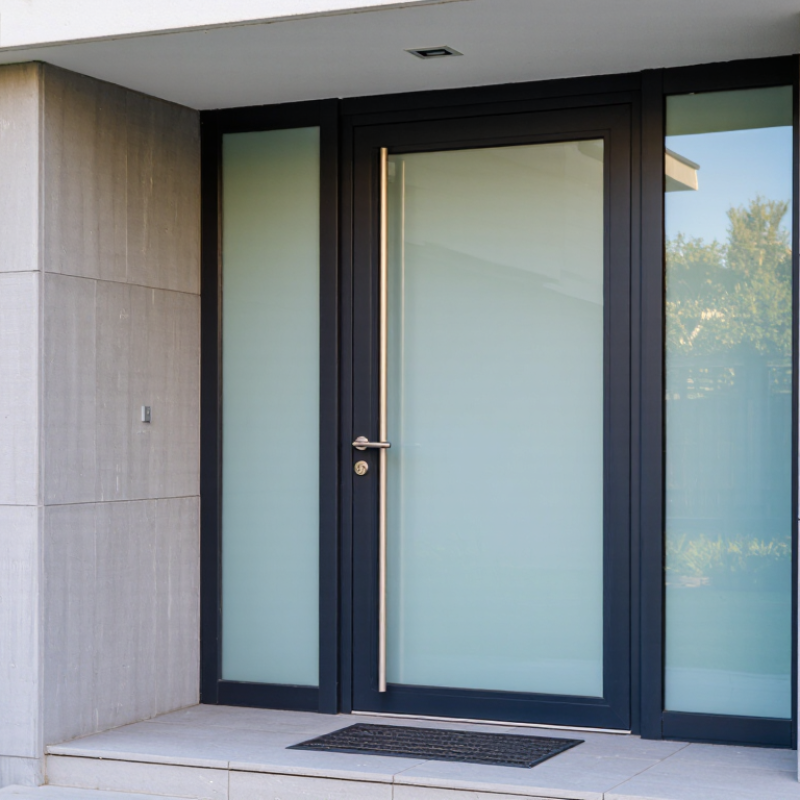
How to Choose the Best Aluminium Entrance Door?

Define Your Entrance Door Needs and Site Conditions

How to Choose the Best Aluminium Entrance Door?

Choosing an aluminium entrance door starts with the building, not the catalogue. Begin with use. Is it a busy family entrance, an apartment lobby, or a rarely opened side door? Record opening width, ceiling height, threshold level, delivery routes, and expected daily cycles. IEA’s 2024 Global Status Report for Buildings and Construction reports that buildings consume about 32% of global energy. They also produce about 34% of energy-related emissions. These figures make thermal performance worth checking, even at the front entrance.

Study the site before selecting glass, seals, or finishes. A west-facing doorway may receive intense afternoon heat. Coastal locations need durable finishes and corrosion-conscious hardware. Exposed sites require verified resistance to wind-driven rain and pressure. The U.S. Department of Energy estimates that windows account for 25–30% of residential heating and cooling energy use. An entrance door is not a window, but poor seals can still create uncomfortable drafts. Small gaps matter.

Ask for tested air-leakage, water-penetration, structural, and thermal-performance results. Standards such as AAMA/WDMA/CSA 101/I.S.2/A440 provide a useful testing framework. Check the complete assembly, not only the aluminium frame. Include the threshold, glass, hinges, locks, gaskets, and installation joint. On site, measurements are often rushed. That is a weakness. Recheck diagonals, drainage paths, and finished floor levels before fabrication. I would not promise zero condensation or maintenance. Climate, ventilation, shading, and workmanship can change the result. Choose a door specification that matches real exposure, accessibility needs, security requirements, and cleaning habits.

Compare Aluminium Door Styles, Materials, and Construction Quality

Choosing an aluminium entrance door starts with style, but construction quality matters more. Slim frames suit modern homes, while framed panels create a warmer, traditional appearance. I have seen attractive doors fail because installers ignored threshold drainage and frame alignment. Measure twice.

Material selection affects comfort and durability. Aluminium is strong, light, and resistant to warping, but untreated frames can transfer heat quickly. Choose thermally broken profiles, insulated cores, and sealed glazing. The U.S. Department of Energy reports that windows can cause 25–30% of residential heating and cooling energy use. A poorly designed entrance door can add to that loss. Look for tested U-values, air-leakage results, and water-penetration ratings, not vague claims.

Construction details reveal real quality. Check welded or mechanically reinforced corners, adjustable hinges, multi-point locking, compression seals, and a sloped sill with visible drainage paths. Performance testing under AAMA/WDMA/CSA 101/I.S.2/A440 provides useful evidence for air, water, and structural resistance. Installation still matters. Even a certified door may leak when the opening is uneven or the sill lacks support. The International Aluminium Institute states that recycled aluminium requires about 5% of the energy used for primary aluminium production, although recycled content and traceability should be verified rather than assumed.

Evaluate Thermal Performance, Security, and Weather Resistance

How to Choose the Best Aluminium Entrance Door?

Thermal performance should be assessed before appearance. In practice, a well-designed aluminium door keeps winter drafts outside and indoor heat stable. Start with the complete door system, not the frame alone. Check its U-value, thermal break design, and insulated panel construction. Lower U-values usually indicate better insulation. Ask for independently verified performance data. Do not trust vague claims. Even a strong frame performs poorly when installation gaps remain around the threshold.

Security depends on several connected details. Look for a rigid frame, reinforced hinges, and a quality multi-point locking system. The cylinder should resist drilling, picking, and forced rotation. Laminated safety glass can slow impact attacks and reduce dangerous breakage. A secure door must also close tightly without excessive force. I once inspected a beautiful entrance door with a weak strike plate. That detail changed my opinion.

Weather resistance becomes obvious during heavy rain. Check the threshold design, drainage channels, seals, and corner joints. Effective compression gaskets should remain flexible after repeated temperature changes. Powder-coated surfaces need proper preparation, especially in coastal or polluted areas. Ask about air leakage, water penetration, and wind-load testing. These figures are more useful than attractive photographs. Installation still matters. A minor alignment error can create noise, drafts, or standing water. My own mistake was focusing too much on laboratory ratings and too little on site drainage. The surrounding paving must guide water away from the entrance.

How to Choose the Best Aluminium Entrance Door? – Evaluate Thermal Performance, Security, and Weather Resistance
Evaluation Dimension Key Specification Recommended Target for an Entrance Door Why It Matters What to Check Before Purchase
Thermal Performance Whole-door U-value A lower U-value indicates better resistance to heat transfer and can help reduce heating and cooling demand. Request a declared or independently tested U-value for the complete door assembly, not only for the aluminium frame.
Thermal Performance Thermal break depth A polyamide thermal break separates the inner and outer aluminium sections, reducing thermal bridging and interior condensation risk. Confirm the thermal-break material, continuity around the frame, and compatibility with the door leaf and threshold.
Thermal Performance Glazing configuration Glass often occupies a large part of the door area, so its insulation value strongly affects overall performance. Check the glazing U-value, gas fill, warm-edge spacer, safety classification, and total glass thickness.
Thermal Performance Air leakage Lower air leakage improves comfort, reduces drafts, and supports energy efficiency. Look for test results to EN 1026 and classification to EN 12207, where applicable.
Security Resistance class Resistance classes assess how effectively a door resists defined manual attack methods and tools. Verify certification to EN 1627 and ensure that the tested configuration matches the supplied door.
Security Locking system Multiple locking points help distribute load along the door edge and improve resistance to forced entry. Check cylinder protection, anti-drill features, hook bolts or deadbolts, and the number and position of locking points.
Security Hinges and frame anchoring Strong hardware cannot compensate for weak hinges or inadequate installation into the surrounding wall. Confirm hinge load capacity, hinge-side security, fixing spacing, and the installer’s anchoring method.
Security Safety glazing Safety glazing helps reduce injury risk and can improve resistance to impact or attempted break-in. Check compliance with the applicable safety-glazing standard and identify whether laminated glass is required near locks or low-level areas.
Weather Resistance Water tightness Water-resistance performance helps prevent rain penetration around the frame, sill, and seals. Review test results to EN 1027 and classification to EN 12208, considering wind-driven rain and local exposure.
Weather Resistance Wind load resistance A properly rated door is less likely to deform, leak, or become difficult to operate during strong winds. Ask for classification to EN 12210 and ensure the size and glazing arrangement match the tested product.
Weather Resistance Gaskets and seals High-quality seals help control air infiltration, water penetration, noise, and dust. Inspect corner joints, compression, seal continuity, and the availability of replacement gaskets.
Weather Resistance Threshold design The threshold is a common weak point for heat loss, drafts, and rain penetration. Check accessibility requirements, drainage paths, threshold height, and compatibility with the floor finish.
Durability Corrosion and surface finish A suitable finish protects aluminium from weathering and helps maintain appearance over time. For coastal or industrial areas, request an appropriate corrosion-resistance specification and care instructions.
Durability Operating-cycle performance Entrance doors may experience repeated opening, closing, slamming, and locking loads. Review relevant hardware durability results, hinge adjustment provisions, and maintenance requirements.
Installation Quality Perimeter installation Even a high-performing door can leak heat or water if the frame-to-wall connection is poorly installed. Confirm airtight internal sealing, weatherproof external sealing, insulated gaps, and mechanically secure fixing.
Maintenance Serviceability Routine maintenance preserves security, smooth operation, air tightness, and water resistance. Obtain instructions for hinge adjustment, lock lubrication, drainage cleaning, and finish care.
Selection note: Performance classes and target values should be matched to the local climate, building regulations, door dimensions, exposure level, and installation conditions. Always request test documentation for the complete door assembly and its actual configuration.

Select Suitable Sizes, Glazing, Hardware, and Surface Finishes

How to Choose the Best Aluminium Entrance Door?

Measure the structural opening, not the old door leaf. Allow space for the frame, threshold, seals, and installation tolerances. A 900 mm door may feel comfortable, but furniture access can demand more width. Check height, swing direction, and accessibility early. The U.S. Department of Energy reports that windows can account for 25–30% of household heating and cooling energy use. Therefore, choose insulated glazing with a low U-factor and suitable solar heat gain control. Clear glass looks bright, but laminated or textured glass may offer better privacy and safety.

Hardware must match daily use. A heavy entrance door needs adjustable hinges, a durable lock case, and a handle that remains comfortable in wet weather. Ask for tested air, water, and structural performance, not attractive photographs. NFRC ratings help compare U-factor and solar heat gain, although they do not replace proper installation. That detail is often underestimated. A poor threshold can defeat good glazing and seals.

Surface finish deserves equal attention. Powder coating should meet an appropriate architectural coating standard, such as AAMA 2604 or AAMA 2605, depending on exposure and appearance requirements. Coastal air, strong sunlight, and frequent cleaning can shorten the finish’s life. Select a proven color, but inspect a physical sample first; screens can mislead. I would also request maintenance instructions and written test evidence. Perfect choices rarely exist, and a slightly less dramatic finish may age better.

Review Installation Requirements, Maintenance, Warranty, and Cost

Choosing an aluminium entrance door starts with the opening, not the showroom finish. Measure the frame, threshold, wall depth, drainage path, and swing clearance. Installation teams should verify plumb, level, fixing spacing, thermal breaks, and perimeter sealing. NFRC labeling reports U-factor, solar heat gain coefficient, and visible transmittance for rated products. The U.S. Department of Energy estimates that air leakage can cause 25–40% of heating and cooling energy use. That makes a poorly sealed threshold more than a cosmetic defect. Measure twice.

Ask how powder-coated surfaces respond to coastal salt, hard water, and scratched edges. Wash with mild detergent, inspect seals every season, and clear sill drainage holes. Do not use abrasive pads. Warranty language deserves closer inspection than glossy brochures. The U.S. Federal Trade Commission advises checking coverage, duration, exclusions, and promised remedies in written warranties. Confirm whether labor, glass, hardware, finish, and installation remain covered after ownership changes. Many disputes begin with one missing sentence. Keep receipts.

Compare total installed cost, not the door leaf alone. Request separate prices for removal, structural repairs, flashing, threshold preparation, hardware, delivery, and disposal. A cheaper quote may hide a weak sill or repeated adjustment visits. A 2024 national Cost vs. Value report shows that project returns vary sharply by location and scope, so national averages cannot price your doorway accurately. Ask for air and water performance evidence where exposure is severe. Testing matters. I would still allow a contingency; existing masonry rarely behaves perfectly.

How to Choose the Best Aluminium Entrance Door?

Review installation requirements, maintenance, warranty, and cost before making a final selection. The chart shows typical installed planning ranges in USD for common residential aluminium entrance-door configurations.

A standard single door usually has the lowest installed cost, while thermally broken, double, and oversized custom doors require higher budgets because of improved insulation, larger glazing areas, stronger hardware, and more complex installation. Confirm the structural opening, threshold drainage, flashing, weather seals, and local code requirements. Routine cleaning twice a year and periodic hardware and seal inspections can help extend service life. Residential warranties commonly cover approximately 5–10 years, but coverage varies by component and installation conditions.

FAQS

What thermal features should an aluminium entrance door have?

Check the complete door system, not only the frame. Look for a low U-value, thermal breaks, and insulated panels. Ask for independently verified data. Lower U-values usually mean better insulation. Measure twice.

How can I improve entrance door security?

Choose a rigid frame, reinforced hinges, and a tested multi-point lock. The cylinder should resist drilling, picking, and forced rotation. Laminated safety glass can slow impacts and reduce dangerous fragments. Inspect the strike plate carefully.

How do I evaluate weather resistance?

Check the threshold, drainage channels, seals, and corner joints. Ask for air leakage, water penetration, and wind-load results. Flexible compression gaskets matter after temperature changes. Water should flow away from the entrance.

What measurements should I take before ordering?

Measure the structural opening, wall depth, threshold space, and swing clearance. Include frame thickness, seals, and installation tolerances. A wider door may help furniture access. Do not measure only the old door leaf.

Which glazing is suitable for an entrance door?

Insulated glazing can reduce heat transfer. Low U-factor glass may improve efficiency. Solar heat control helps in sunny rooms. Clear glass adds brightness, while textured or laminated glass improves privacy and safety. Preferences can conflict.

What hardware suits a heavy aluminium door?

Use adjustable hinges, a durable lock case, and a comfortable handle. Hardware must tolerate frequent use and wet weather. The door should close tightly without excessive force. A beautiful handle cannot fix weak hinges.

Which surface finish is best?

Choose a proven architectural coating suitable for sunlight, salt air, and pollution. Request a physical color sample because screens can mislead. Inspect scratched edges during cleaning. A less dramatic finish may age better.

What installation details affect performance?

Installers should check plumb, level, fixing spacing, thermal breaks, and perimeter sealing. Poor alignment can create drafts, noise, or standing water. Prepare the threshold carefully. Laboratory ratings cannot rescue poor site drainage.

How should I maintain the door?

Wash the surface with mild detergent and avoid abrasive pads. Inspect seals every season. Clear sill drainage holes before heavy rain. Check scratched edges and loose hardware. Maintenance is simple, but easy to forget.

What should the total budget include?

Compare the fully installed cost, not only the door leaf. Request separate prices for removal, repairs, flashing, threshold work, hardware, delivery, and disposal. Review warranty coverage for labor, glass, hardware, finish, and installation. Keep receipts. Allow a contingency because existing masonry is rarely perfect.

Conclusion

Choosing the best Aluminium Entrance Door starts with understanding your property’s entrance, local climate, available space, security expectations, and daily usage. Consider whether you prefer a modern, minimalist, traditional, or customized design, then compare frame construction, material quality, thermal breaks, and manufacturing precision. A well-designed door should provide effective insulation, dependable security, resistance to wind and rain, and long-term durability.

Next, select dimensions, glazing options, locks, hinges, handles, thresholds, and surface finishes that suit both the building and your practical needs. Check whether the door can be installed correctly within the existing structure and confirm requirements for preparation, adjustment, and sealing. It is also important to understand cleaning procedures, maintenance needs, warranty coverage, delivery arrangements, and the total cost rather than focusing only on the purchase price. By evaluating these factors together, you can choose an Aluminium Entrance Door that balances appearance, performance, safety, and lasting value.

Mason

Mason

Mason is a seasoned marketing professional with a deep expertise in the company's offerings and a passion for driving brand awareness. With a strong background in digital marketing strategies, he has an innate ability to connect with diverse audiences and effectively communicate product benefits.......