7 Tips for Choosing an Aluminum Entrance Door

Time:2026-10-14 Author:Henry
0%

Choosing an Aluminum Entrance Door is not merely a style decision. It affects security, weather protection, comfort, and maintenance. The U.S. Department of Energy’s Building Technologies Office reports that windows can represent 25–30% of residential heating and cooling energy use. Entrance doors are different, but they face the same weaknesses: air leakage, poor installation, and thermal bridging.

The details matter.

Building scientist Joseph Lstiburek states, “Windows and doors are holes in walls.” This simple observation deserves attention. A slim aluminum frame may look elegant, yet an unsuitable threshold can allow rainwater beneath the door. A weak thermal break can leave condensation along the interior edge. A decorative finish may also fade sooner than expected in strong sunlight.

This guide uses practical selection criteria and recognized testing principles. ASTM E283 addresses air leakage. ASTM E331 evaluates resistance to water penetration. U.S. and Canadian fenestration standards, including AAMA/WDMA/CSA 101/I.S.2/A440, also help buyers compare tested performance. Product data should be checked carefully, not accepted at face value.

I would not claim that the most expensive door is always the best choice. Sometimes, installation quality matters more than a premium handle or thicker panel. Even experienced buyers overlook drainage details. That is why these seven tips focus on frame design, thermal performance, security hardware, glass, finishes, weather seals, and installer competence. A reliable Aluminum Entrance Door should perform quietly through cold mornings, heavy rain, fingerprints, and years of daily use.
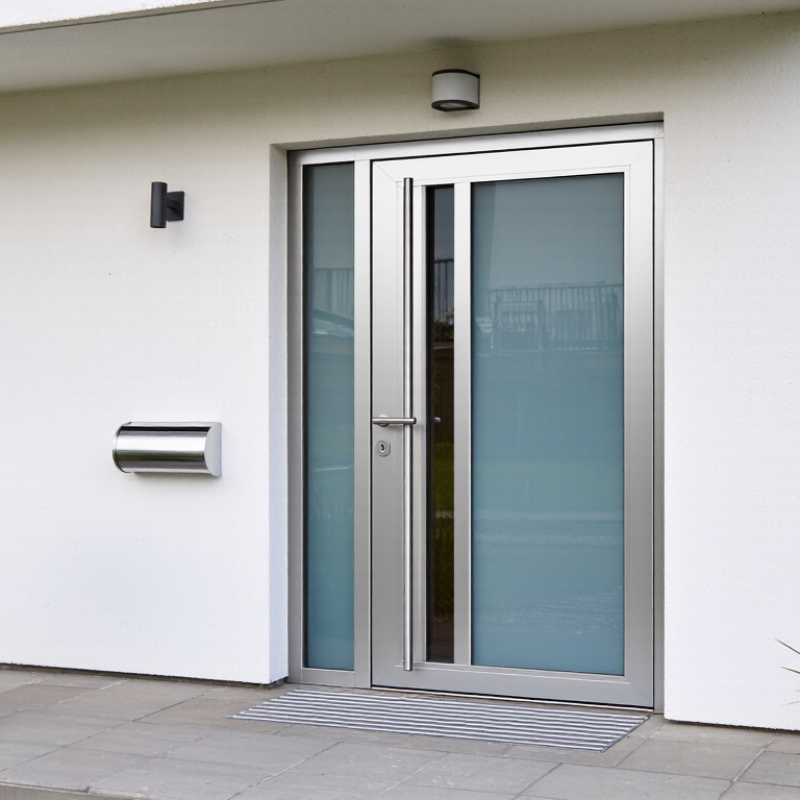
7 Tips for Choosing an Aluminum Entrance Door

Define the opening, climate, and traffic level before comparing doors

7 Tips for Choosing an Aluminum Entrance Door

Define the opening, climate, and traffic level before comparing doors. Measure the width, height, wall thickness, and available swing space. Check whether the frame is square. Small errors can create drafts, rubbing, or difficult locking.

Decide how the door will be used each day. A quiet private entrance needs different hardware than a busy school or apartment entry. Frequent traffic calls for reinforced hinges, durable seals, and a closer rated for repeated cycles. Consider delivery carts, muddy shoes, and occasional impact. A beautiful handle may not survive heavy use.

Study the local climate carefully. Coastal air can accelerate corrosion, while freezing weather can expose weak weather seals. Choose aluminum finishes and hardware suited to local moisture, sunlight, and temperature changes. Thermal breaks may improve indoor comfort in hot or cold regions. Ask for documented performance data, not only attractive claims.

Compare safety features after these conditions are clear. Look for reliable locking points, clear sightlines, and emergency access requirements. Professional installation matters as much as the door itself. I have seen well-made doors perform poorly because the sill was installed unevenly. That mistake is easy to overlook.

Leave clearance for mats and seasonal swelling around nearby materials. Check cleaning needs, replacement parts, and warranty terms before ordering. Do not compare prices alone. A cheaper door may demand earlier adjustment, especially under constant traffic. Recheck every measurement. Memory is not a measuring tool.

Compare NFRC U-factor, SHGC, and thermal-break performance

7 Tips for Choosing an Aluminum Entrance Door

NFRC ratings make door comparisons more useful than appearance alone. U-factor measures heat transfer through the complete door assembly. Lower values mean better insulation. For example, a 0.20 U-factor loses less heat than 0.30. Check the certified rating, not only the center-panel specification.

SHGC measures how much solar heat enters through glazed areas. NFRC standards define it on a scale from 0 to 1. A low SHGC can reduce summer heat near a bright south-facing entrance. A higher value may help warm a cold hallway during winter. Climate and orientation matter. The U.S. Department of Energy reports that windows can represent 25–30% of residential heating and cooling energy use. A glazed entrance deserves similar attention.

Thermal breaks matter in aluminum frames. They separate interior and exterior metal paths, reducing conductive heat flow and surface condensation risk. Look for a continuous polyamide or similar insulating barrier. Inspect the threshold too. A strong frame can still feel cold at the sill. NFRC certification covers tested product performance, while installation quality controls real-world results. I once saw a well-rated door underperform because the perimeter seal was uneven. The label was not the problem. The fitting was. Ask for full-door U-factor data, tested SHGC, air-leakage information, and thermal-break details before comparing prices. DOE guidance also stresses proper sealing around openings. Small gaps become obvious on windy mornings.

7 Tips for Choosing an Aluminum Entrance Door

Compare NFRC U-factor, SHGC, and thermal-break performance. Lower U-factor means better resistance to heat flow, while SHGC indicates how much solar heat enters through the glazed area.

Representative planning values for common aluminum door configurations. Actual NFRC ratings vary with door size, glazing, frame design, hardware, and installation conditions. Confirm final performance using the product’s NFRC label.

Configuration Thermal-break performance Selection guidance
Non-thermally broken aluminum with clear double glazing No continuous insulating barrier; higher conductive heat transfer Suitable mainly for mild climates or low-energy priorities
Thermally broken aluminum with clear double glazing Continuous low-conductivity separator reduces frame heat flow A practical baseline for improved comfort and condensation control
Thermally broken aluminum with low-e double glazing Improved frame and glazing insulation A balanced choice for many heating and cooling climates
Thermally broken aluminum with low-e triple glazing Highest insulation level among the configurations shown Best suited to demanding cold-climate or high-performance projects

Specify ASTM E283 air leakage ≤0.3 cfm/ft² at 1.57 psf

7 Tips for Choosing an Aluminum Entrance Door

Specify ASTM E283 air leakage at or below 0.3 cfm/ft² under a 1.57 psf pressure difference. This value indicates controlled air movement during laboratory testing.

Tip 1: Request the complete test report, not only a catalog claim. Confirm the tested door size, configuration, and operable conditions.

Tip 2: Check whether the rating applies to the entire entrance assembly. A panel-only result may not represent the installed system.

Tip 3: Examine the weather seals. Continuous compression gaskets should meet tightly at the head, jambs, meeting stiles, and threshold.

Tip 4: Inspect the threshold design. Uneven floors can create small gaps beneath the door. A properly adjustable threshold helps maintain contact without excessive operating force.

Tip 5: Review corner construction and frame joints. Weak connections may leak around fasteners, glazing pockets, or concealed splices. Ask how joint sealants are applied and maintained.

Tip 6: Consider hardware adjustment. Loose hinges, misaligned locks, or a dragging panel can reduce gasket compression. Small alignment errors matter.

Tip 7: Require field verification after installation. ASTM E283 results come from controlled testing, while real buildings have wind, movement, and imperfect workmanship. I have seen a well-rated door perform poorly because the perimeter frame was not sealed to the wall. That detail is easy to overlook. Keep the installation drawings, test documentation, and adjustment records together. Performance should be checked, not assumed.

Require ASTM E331 water resistance and tested drainage details

Choosing an aluminum entrance door requires more than comparing frame finishes and hardware. Ask for evidence of ASTM E331 water-resistance testing. This test exposes a door assembly to controlled water spray and pressure. It helps reveal leaks around joints, glazing, and thresholds. However, laboratory performance is not a promise for every installation. Wind, poor shimming, and damaged seals can change the result.

Request the complete test report, not only a passing statement. Check the tested door size, pressure, exposure time, and installation method. These details matter. A small sample may not represent a wide commercial entrance. The report should identify where water appeared and whether drainage remained functional. Look for a sill with a clear slope, weep openings, and an uninterrupted path toward the exterior. Blocked weeps can turn minor moisture into concealed frame damage.

I have seen installers focus on sealant while ignoring the sill pan. That approach looks tidy but can trap water. Review flashing transitions before the door arrives. Confirm that the wall membrane connects with the frame, and keep exterior sealant joints tooled and continuous. A practical site check includes spraying the completed entrance and inspecting the interior after several minutes. Do not rely on appearance alone. Poorly aligned leaves, loose gaskets, or missing end dams may pass a casual inspection. Document corrections with photographs and retest questionable areas.

Match EN 1627 RC2 security, AAMA 2605 finish, and warranty terms

Choosing an aluminum entrance door requires more than comparing colors and handle styles. Check whether the complete door assembly meets EN 1627 RC2, not only the cylinder or lock. Request the test report and confirm its scope. It should cover the frame, hinges, glazing, hardware, and installation method. Ask who performed the test and whether your chosen size matches the tested configuration. A strong rating can lose value when installation is careless.

The finish deserves equal attention. AAMA 2605 indicates a high-performance coating system, but the certificate alone does not predict every site condition. Confirm the pretreatment, coating thickness, color stability, gloss retention, and resistance to chalking. Request a physical sample. Digital colors can mislead. Coastal air, strong sunlight, and pollution may expose weak preparation sooner than expected. I have seen attractive samples age differently after installation, so maintenance guidance matters.

Read the warranty before signing. Look for separate coverage periods for the coating, frame, hardware, seals, and glass. Check exclusions, labor responsibility, claim procedures, and whether the warranty transfers with the property. Also inspect the thermal break, threshold drainage, gasket compression, and door alignment. These details affect comfort and security every day. One point is easy to miss: RC2 performance does not automatically guarantee low energy bills. Measure the opening carefully, verify the installer’s experience, and keep all test documents and maintenance records.

FAQS

What does the U-factor measure in an aluminum entrance door?

It measures heat transfer through the complete door assembly. Lower values usually mean better insulation. A 0.20 rating loses less heat than 0.30. Check full-door data.

Why does SHGC matter for a glazed entrance?

SHGC shows how much solar heat enters through glass. Lower values can reduce summer heat near a sunny entrance. Higher values may warm a cold hallway in winter.

What should I inspect in an aluminum thermal break?

Look for a continuous insulating barrier between interior and exterior metal. Polyamide is one common option. Inspect the threshold too. Cold sills still matter.

Does certification guarantee good real-world performance?

No. Installation quality changes results. Uneven perimeter seals can cause drafts, even with strong ratings. Small gaps become obvious on windy mornings.

What water-resistance evidence should I request?

Request the complete ASTM E331 test report. Check the tested size, pressure, exposure time, and installation method. A passing statement alone is not enough.

Which drainage details help prevent concealed water damage?

Look for a sloped sill, open weep holes, and a clear path toward the exterior. Confirm flashing transitions and end dams. Blocked weeps are easy to miss.

What does an EN 1627 RC2 rating cover?

Confirm that the complete assembly meets RC2 requirements. The report should include the frame, hinges, glazing, hardware, and installation method. A lock rating alone is insufficient.

How should I evaluate the exterior finish and warranty?

Check coating thickness, pretreatment, color stability, gloss retention, and chalking resistance. Request a physical sample. Digital colors can mislead. Read separate warranty periods carefully.

Can a secure door automatically reduce energy costs?

No. Security performance and energy performance are different. Verify U-factor, SHGC, thermal breaks, seals, and alignment. I would not trust appearance alone.

What should I document after installation?

Photograph seals, flashing, drainage, and alignment. Spray-test questionable areas and inspect indoors after several minutes. Keep test reports and maintenance records. Imperfections happen. Track them.

Conclusion

Choosing the right Aluminum Entrance Door starts with understanding the building’s opening, local climate, and expected traffic level. Confirm the required dimensions, swing, threshold, and accessibility needs before comparing models. In energy performance, review the NFRC U-factor and SHGC ratings, and look for an effective thermal break to reduce heat transfer and improve indoor comfort. For durability, require documented air-leakage performance meeting ASTM E283 at no more than 0.3 cfm/ft² at 1.57 psf.

Water management and security are equally important. The door should demonstrate resistance to water penetration under ASTM E331 and include tested drainage details that direct moisture away from the interior. For security, consider systems tested to EN 1627 RC2, along with suitable locks, hinges, and reinforced frames. Finally, evaluate the finish quality, preferably one meeting AAMA 2605 requirements, and review installation guidance, maintenance responsibilities, and warranty terms. A careful comparison of these factors will help ensure the door performs reliably, looks attractive, and remains suitable for its environment over time.

Henry

Henry

Henry is a dedicated marketing professional with a profound expertise in the company's offerings. With years of experience in the industry, he possesses an impressive understanding of the market dynamics and consumer behaviors that drive success. Henry is committed to sharing his insights through......